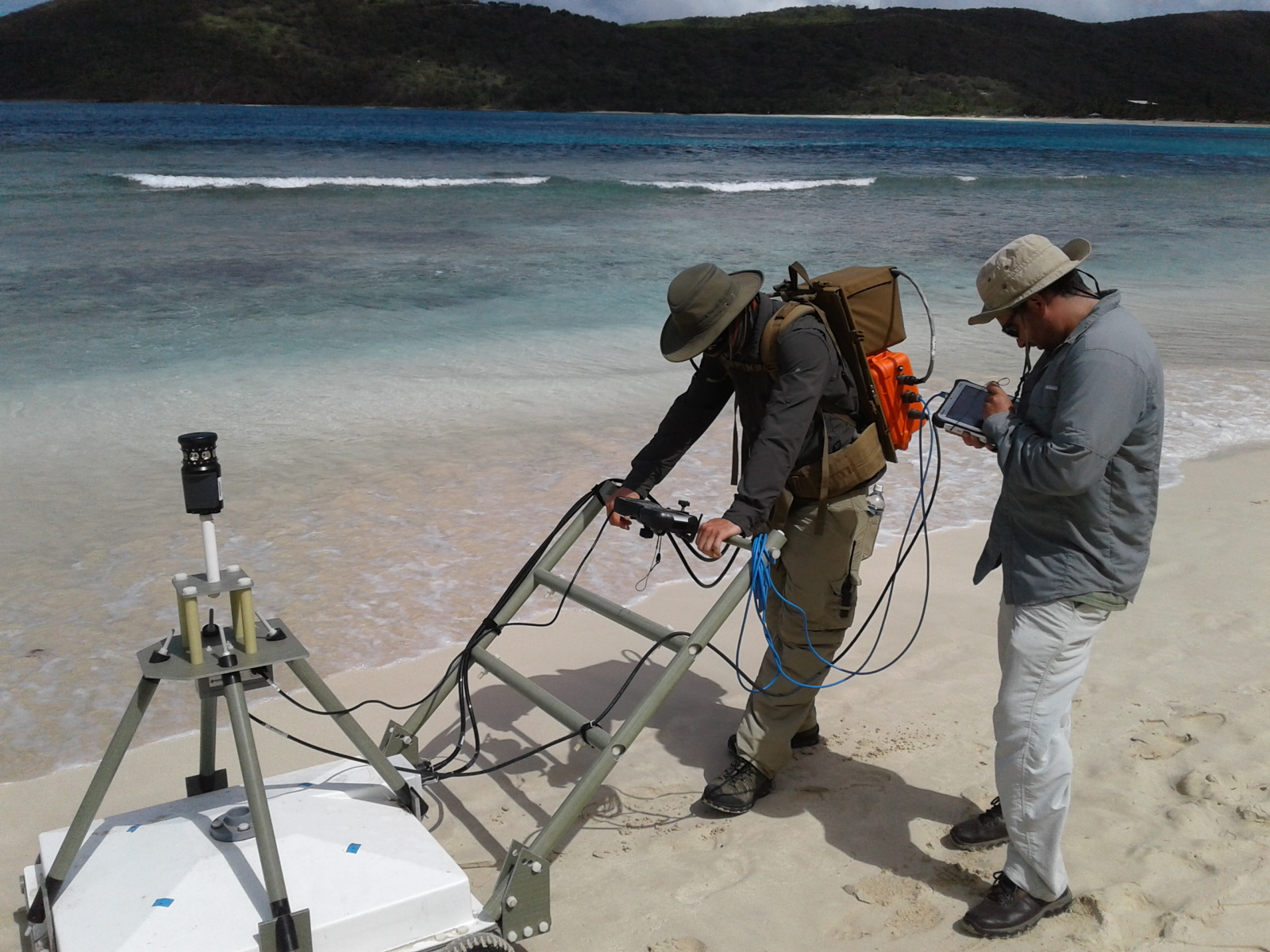
During the past two centuries, the Department of War (DOW), formerly referred to as the Department of Defense, has used land throughout the United States to both train Soldiers, Airmen, Sailors and Marines, and test new weapons to ensure the nation's military readiness. As training and testing needs changed, DOW obtained property or returned it to private or public uses.
Today, DOW is responsible for the environmental restoration (cleanup) of properties that were formerly owned by, leased to or otherwise possessed by the United States and under the jurisdiction of the Secretary of War prior to October 1986. Such properties are known as Formerly Used Defense Sites or FUDS. The U.S. Army is DOW’s lead agent for the FUDS program and the U.S. Army Corps of Engineers executes the FUDS program on behalf of the U.S. Army and DOW. The goal of the FUDS program is to reduce risk to human health and the environment through implementation of effective, legally compliant, and cost-effective response actions.
The scope and magnitude of the FUDS program are significant, with more than 10,000 properties that have been evaluated to be included in the FUDS program. Information about the origin and extent of contamination or munitions, land transfer issues, past and present property ownership, applicable laws and DOW policies must be evaluated before DOW considers a property eligible for Defense Environment Restoration Account funding under the FUDS program. FUDS properties are cleaned up in accordance with the Comprehensive Environmental Response, Compensation, and Liability Act (CERCLA). CERCLA is a deliberate, multi-step process that provides a consistent approach to cleanup activities and affords stakeholder input during the process.
As of Sept. 30, 2025, approximately 5,450 FUDS nationwide have been identified for investigation and cleanup. Cleanup actions have been completed at nearly 3,850 sites, while work continues at more than 1,600 others. A single property may have more than one cleanup project. The type of cleanup required varies from property to property, and can include cleaning up hazardous, toxic and radioactive waste sites; removing munitions and explosives of concern and munitions constituents; or doing building demolition and debris removal if the building or structure was unsafe at the time of transfer.
In accordance with DOD Instruction 4715.07 Defense Environmental Restoration Program and DOD Interim Risk Management (IRM) procedures, the U.S. Army Corps of Engineers is implementing IRM by conducting a Notification and Safety Education initiative at FUDS where investigations, removal actions or remedial actions are not planned to be conducted for an extended period of time.