Flood and Coastal Storm Risk Management

Photo of a city on a peninsula, surrounded by water on three sides. The USACE Flood and Coastal Storm Risk Management (FRM-CSRM) mission seeks to protect lives by safeguarding communities from the harmful impacts of inland flooding and coastal storms, reducing vulnerabilities, enhancing resilience, and reducing risk to property and natural resources. USACE FRM-CSRM programs and projects provide dependable delivery of vital FRM-CSRM infrastructure nationwide, including levees, dams and sea walls, as well as natural and nature-based approaches such as wetland restoration, beach nourishment, and marsh creation.  Through trusted engineering practices and clear, data-driven decisions, USACE ensures projects are delivered safely, on time and within budget. Communities can also utilize USACE’s technical assistance and expertise to help develop tools such as floodplain or shoreline management plans and emergency response strategies.


FRM-CSRM is a primary mission of the USACE Civil Works program and encompasses programs and projects that reduce risks associated with inland flooding and the water-related effects of coastal storms for communities across the nation. 


Working in the Nation's Interests

FRM-CSRM By the Numbers June2025For over a century, USACE has utilized the various FRM-CSRM authorities and programs from Congress to plan, construct, operate, and maintain hundreds of FRM and CSRM projects mitigating flood impacts on coastal and inland communities. Each USACE project and program is unique, addressing specific national, regional, and local priorities and needs. Flood and coastal storm risk cannot be eliminated, but certain actions can reduce communities’ vulnerability.

In addition to planning, designing, constructing, operating, and maintaining a suite of congressionally authorized FRM and CSRM projects, the USACE FRM-CSRM mission supports over 40 programs and activities, including Technical Assistance programsDam Safety and Levee Safety programs, and Research and Development. While each program has specific objectives, they all operate within a unified framework to deliver nationally consistent, locally informed FRM-CSRM solutions that serve the public interest.

Proactive Riverine Flood Risk Management. Saves Lives, Infrastructure, and Taxpayer Dollars. For Every $1 Invested in Flood Risk Management, $16 in Flood Losses Are Prevented.Click to view larger.

In fiscal year, USACE riverine FRM projects delivered an estimated $247.5 billion in benefits. This reflects $16 in flood damage reduction benefits for every $1 in federal funds invested in USACE. Since fiscal year 2015, the average FRM benefits delivered by USACE projects was an estimated $225.4 billion annually. National economic benefits are estimated by calculating the annual flood damages that USACE FRM projects prevent. These estimates are based on weather conditions for a given year, and, as flooding varies from year to year, some years may demonstrate greater benefits than others.

Flood Risk Management Benefits For 2015-2024. $225.4 Billion 10 Year AverageClick to view larger.

Current coastal flood risk, including sea level change effects, shifting weather patterns, the intensity and duration of storms, damages from combined coastal storms and flooding, loss of sea ice, and other associated impacts, are driving concerns about the ability of coastal communities to recover from near-term events and adapt for long-term sustainability. USACE has begun to capture the full benefits of CSRM projects and more information will be available soon.

FRM-CSRM USACE National Leadership

Bluestone Dam, West Virginia

Bluestone Dam, West Virginia

USACE FRM-CSRM leadership provides an enterprise view of the national USACE FRM-CSRM portfolio – bringing in members from across the mission, enabling the prioritization of resources toward the highest-impact, nationally significant flood and coastal storm risk challenges. This national perspective is essential to delivering the FRM-CSRM mission with speed, efficiency, accountability, and measurable impact for the American public. The USACE FRM-CSRM community promotes an agile, innovative culture, where teams collaborate, develop, implement, and share best practices for new methods and technologies that deliver stronger, more reliable ways to manage risks from flooding and coastal storms nationwide. This internal coordination has established three FRM-CSRM Priority Areas that emphasize opportunities to advance FRM and CSRM activities across Civil Works and throughout the USACE project life cycle. Aligning USACE FRM-CSRM work with these three categories is a meaningful way to advocate for and support initiatives across the FRM-CSRM landscape, ultimately providing greater value to the nation.

Understanding Flood & Coastal Storm Risk

Illustration depicting the components of risk: hazards (e.g., ocean), performance (e.g., how will urban surfaces, fields, drains, channels, perform?), and consequences (who and what are in harm's way?).
Click to view larger.

Risks from flooding and coastal storms result from both the likelihood of natural or man-made water-related hazards and their potential consequences, including threats to human life and damage to homes, businesses, and critical infrastructure. The likelihood of flooding and coastal storm impacts is influenced by the performance of existing FRM and CSRM infrastructure against those hazards. Thus, there are three key components of flooding and coastal storm risk: hazards, performance, and consequences

While FRM and CSRM structures provide some level of protection, they do not eliminate flood or coastal storm risk. Flooding, storm surge, or other water-related effects can still occur in surrounding communities and watersheds even with management measures (structural and nonstructural) in place. These risks change over time and are influenced by external factors including aging infrastructure and community growth. Communities should continually re-evaluate their flood and coastal storm risk and the effectiveness of the methods they have chosen to manage it.

Levee breach during flooding on the Platte River in Missouri.


Coastal flooding in the Great Lakes.

USACE’s FRM-CSRM programs help communities better understand their flood and coastal storm risks by analyzing local conditions, modeling potential future hazards, and using insights from past floods and coastal storms. If FRM or CSRM structures exist, such as a dam, levee, or seawall, those structures’ performance is considered when determining the range of potential risks. In addition to considering the past, USACE looks to the future through modeling and forecasting possible storms – examining the likelihood, severity, and magnitude of flooding. Assessing flooding and coastal storm risk helps communities better understand loss of life and property impacts that could result from potential flooding situations.

Supporting Communities Across the Nation

In an era of increasingly frequent and powerful flooding events and storms, FRM and CSRM projects are more important than ever. Flooding and coastal storms impact millions of people both directly (e.g., bodily harm, property damage) and indirectly (e.g., supply chain interruptions). FRM and CSRM activities help communities prepare for, adapt to, and recover from flood events and coastal storms. USACE supports local communities in reducing threats to life and property from flooding and coastal storms through a variety of FRM-CSRM services, including model, tool, and plan development.

FRM-CSRM Life Cycle
Click to view larger.

USACE has a longstanding commitment to community resilience, which is reflected in its approach to planning, designing, constructing, operating, and maintaining FRM and CSRM projects. USACE FRM and CSRM projects must perform for decades, often under shifting pressures, which requires a lifecycle  mindset that spans from early planning and design through construction and into long-term operations, maintenance, repair, replacement, and rehabilitation. By designing with the future in mind throughout the FRM and CSRM project life cycle, USACE delivers reliable solutions that reduce hazards, remain effective over time, and support both economic growth and environmental protection.
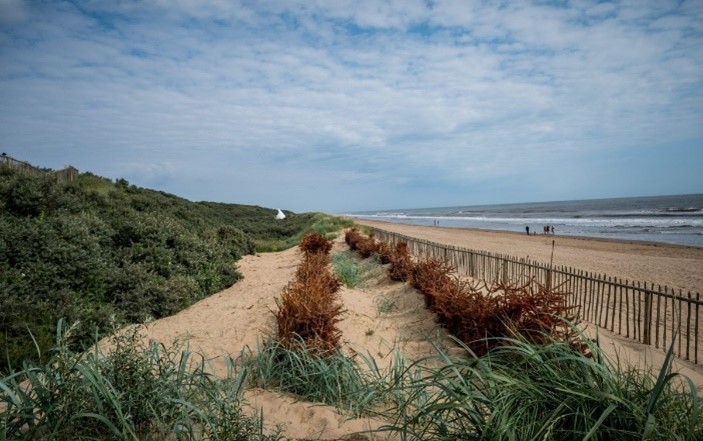
Photo of dunes along a shore.
Dune vegetation is one example of natural   and nature-based features.

USACE FRM-CSRM professionals enlist modeling, analytics, and modern tools that speed up decisions, improve designs, and help communities better understand their flood and coastal storm risk. FRM and CSRM projects often use a mix of approaches — from structural and nonstructural measures to natural and nature-based solutions. Using natural and nature-based measures can also bring added economic and environmental benefits. Choosing the right combination of approaches takes teamwork across government agencies, industry, and public and private partners. USACE is committed to working closely with communities and interagency partners and, when feasible, integrating public-private partnerships into how we deliver our work.

Collaborating with Partners

The state-led Oregon Silver Jackets Team hosted public meetings to review floodplain maps with the local community based on an interagency flood study in the basin. Silver Jackets is one of several programs in which USACE participates dedicated to engaging with external partners to collaboratively manage flood and coastal storm risk.

The state-led Oregon Silver Jackets Team hosted public meetings to review floodplain maps with the local community based on an interagency flood study in the basin. Silver Jackets is one of several programs in which USACE participates dedicated to engaging with external partners to collaboratively manage flood and coastal storm risk. 

USACE FRM and CSRM activities are grounded in partnerships with local, state, tribal, and federal agencies, as well as the private sector and other stakeholders. FRM-CSRM project managers pursue iterative, collaborative delivery that breaks complex challenges into manageable steps and supports adaptation throughout the project life cycle. Several partnering opportunities help local communities, state agencies, and tribes work with USACE to design, construct, operate, and maintain projects that manage coastal storm and flood risk across the nation.

FRM and CSRM are most successful when viewed as a shared responsibility. There is no single public or private agency or organization that can manage flood or coastal storm risk on its own. USACE fosters collaboration and coordination among diverse community interests, facilitating shared responsibility through enhanced understanding and cooperative governance.


To contact your local USACE District for more information about FRM programs and activities in your area, please click here.